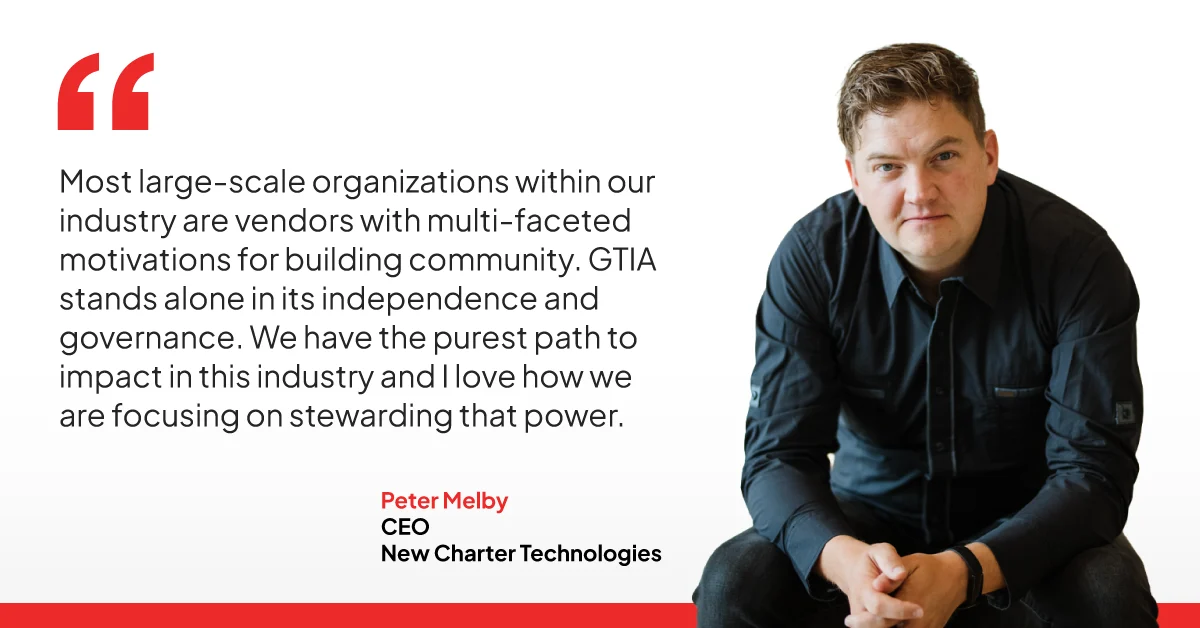
Peter Melby brings a builder’s mindset—and a healthy dose of hard-earned perspective—to the GTIA board of directors, drawing on years of scaling MSPs at Greystone Technology and New Charter Technologies to challenge how the industry thinks about leadership, culture and growth. In this Q&A, Melby reflects on the moment he realized good intentions aren’t enough to build a strong culture, why true alignment (not resistance) drives meaningful change and how GTIA’s independence positions it to spark the bold thinking the channel urgently needs.
A vocal advocate for shifting IT services beyond inward efficiency toward customer-first transformation, Melby is focused on helping the community rethink what success looks like in the years ahead—while continuing to give back in ways that push both peers and the industry forward. Here’s what he had to say.
You’ve spent your career building and scaling MSPs. What’s one defining experience from Greystone Technology or New Charter that most shaped your leadership philosophy?
Early on I felt like I would be a good boss as long as I cared about people. I learned the hard way, when a top employee left suddenly, that people don’t always experience culture the way we plan. Good intentions are not enough. Care for people has to be lived out with deeper planning and intentional action. We have to build businesses based on how people truly think and act, not how we wish they think and act.
New Charter has become a platform for ambitious MSPs that want to grow while protecting their culture and legacy. What excites you most about leading that kind of model right now?
Creative, agile and client-focused business models thrive in periods of change and disruption. Oftentimes “protecting culture and legacy” is code for resisting change. It’s actually the opposite. Legacy is built on success. Success is built on culture. Culture is built on trust and alignment to a greater future. When that alignment happens, powerful change becomes natural. There’s never been a more important time for bold change rooted in personal trust and organizational alignment.
How has being part of GTIA influenced the way you think about the broader IT channel and your role in driving its future?
I was a GTIA outsider for a long time because I didn’t see the organization driving the innovative thinking that actually exists within the organization and membership. I’ve been so excited to see the mindset and brilliance that exists and will shape the future. I’ve enjoyed seeing new leadership dig in and figure out how to keep the legacy while leading a radical new future in this industry. Most large-scale organizations within our industry are vendors with multi-faceted motivations for building community. GTIA stands alone in its independence and governance. We have the purest path to impact in this industry and I love how we are focusing on stewarding that power.
As a GTIA board member, what impact are you most committed to making for ITSPs and technology leaders over your current term?
GTIA needs to be the go-to organization for bold thinking and transformation in an industry that desperately needs new energy and strategy. IT services should operate entirely differently 3 years from today. History says that providers won’t change that quickly, and the change will be inwardly focused (using AI to improve gross margin) rather than market focused (create a more effortless experience, leading to an easier path to growth and profitability).
When you’re not leading New Charter or contributing to GTIA, what’s something you enjoy doing that might surprise people who only know you from the industry
I love to play ice hockey. Unlike most adult hockey players, I didn’t play growing up. I started late and found that it’s great stress relief. Try thinking about work while you’re on the ice. You’ll pay for it.
Meet the GTIA Board of Directors! Read the blog series.