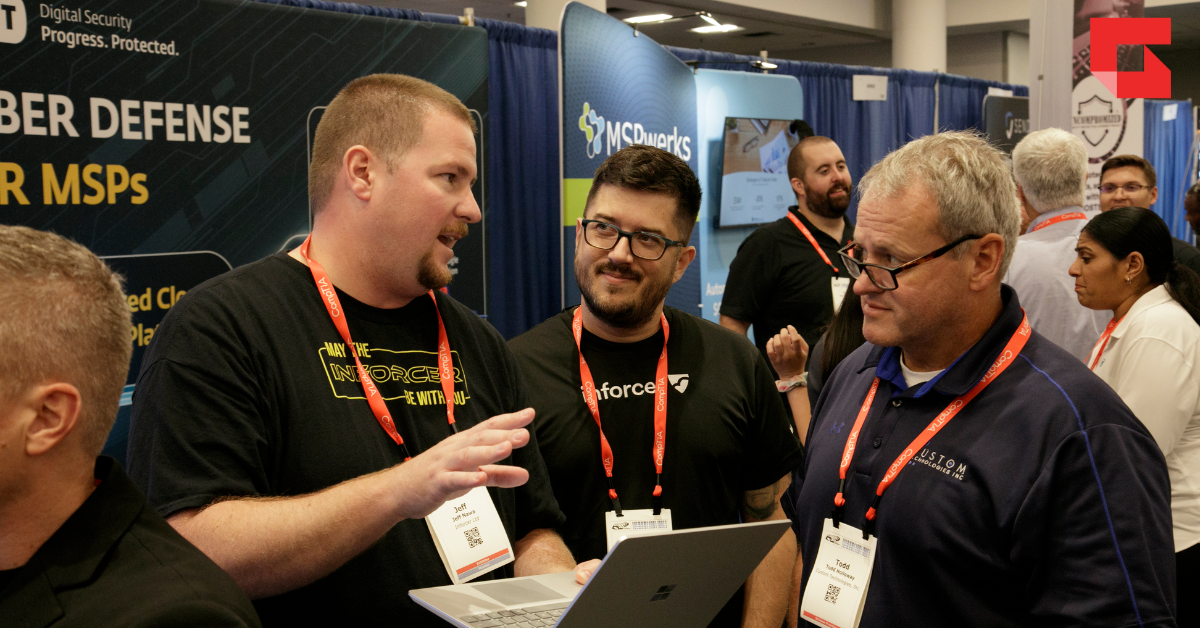
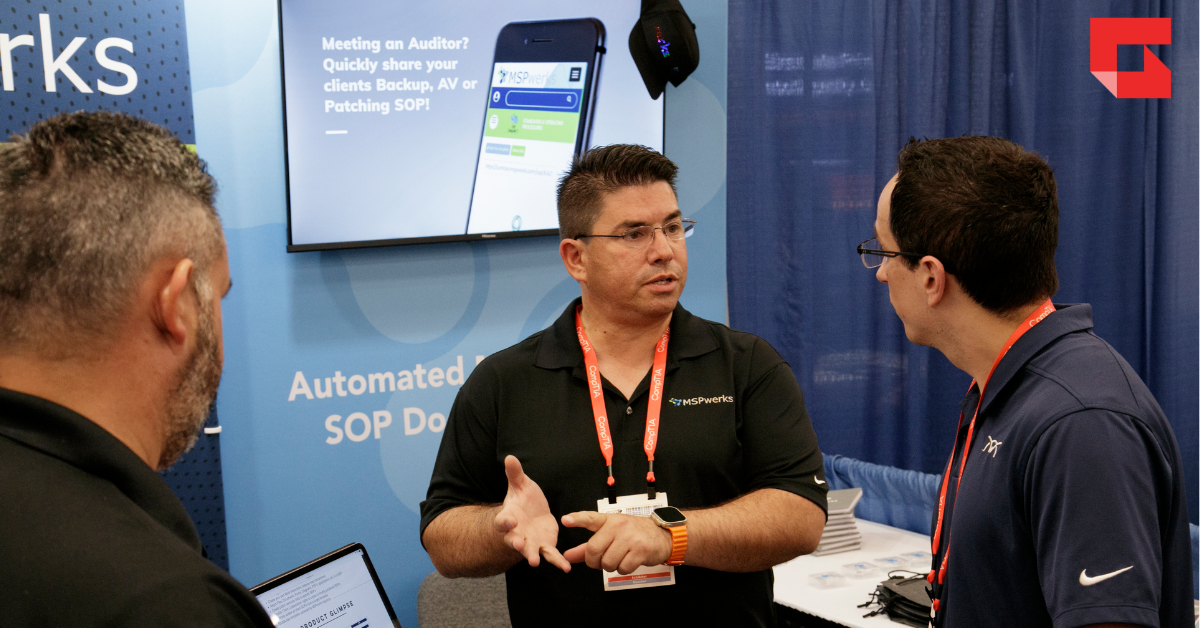
With social platforms splintering and digital feeds growing louder, face-to-face conversations are regaining currency in the channel. Industry veterans Rex Frank, vice president of academy at Pax8, Andy Larin, CEO at allCare IT and Dawn Sizer, CEO at 3rd Element Consulting shared their playbook for turning events into real business outcomes—not just social excursions— at ChannelCon 2025.
The three have spent decades navigating the ecosystem as both IT service providers and vendors. Their verdict is blunt: Conferences are exceedingly valuable, but only if you approach them with intention.
>> Related Content: ITSP Checklist for Channel Events
>> Related Content: Vendor Checklist for Channel Events
Define Your ROI Before You Badge In
Sizer didn’t mince words when challenging attendees to think beyond lanyards and free drinks, encouraging planning and goal setting.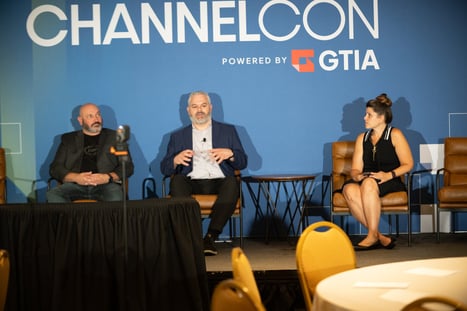
“Vendors tend to sit down and figure out what their ROI is going to be for any event they go to,” she said. “But as an ITSP, or somebody that's delivering a solution to a client, what is yours? Have you figured out what your ROI is for this particular event? Is it networking? Is education? What are you here for?”
You don't show up at an event just to have a party. It’s OK to have fun, but if fun is the focus, you may leave with a bottom line loss—right-fit conferences don’t come free.
“There is a lot of money that goes into showing up at one of these events,” Larin said. “Whether you're an ITSP or an MSP, you've got to figure out if there’s ROI.”
Frank recalled a mentor who always asked him to think about the one thing he would do differently after attending a conference. That forced him to think hard on the plane ride home. Years later, he confronted his old boss about the pressure.
“He said, ‘let me tell you a secret. I never cared what that one thing was. I just needed to know that you knew what it was,’” Frank said.
The lesson: Set a measurable takeaway before the event starts—and hold yourself accountable afterward.
Taking Notes That Actually Matter
Notes at conferences can be a contentious topic. Are you ever going to read them again? Why bother? For Sizer, note-taking isn’t about volume but instead, impact. Her tip? She divides one piece of paper into four quadrants:
- - Brilliant ideas
- - Books to read
- - Tools to check out
- - People to know
“Those are the four things that I care about when I go to any event. And the four things that I take back,” Sizer said.
Whatever method you use, it’s important to decide what you’ll act on. Larin suggests sorting and collating your notes after the event to identify the two or three takeaways worth acting on.
Frank cautions against seagulling. “That's when the MSP owner goes to a show, talks to vendors, buys some stuff, comes back and then they crap it all over their service manager's desk. Don't do that,” he said.
The message is consistent: Notes—and purchases for that matter—only matter if they drive behavior or business change.
From Small Talk to Strategic Capital
When it comes to networking, you have to emphasize intentionality. Sizer admits that mingling at receptions can feel exhausting, especially after long days of sessions. Her strategy: Prepare early.
“How many of you take the time to actually look over an attendee list before you're going somewhere that's not a vendor and figure out who you want to talk to before you even get there?” she asked. “I started to make that a habit and it works out pretty darn well.”
For Larin, the key is reframing relationships.
“All of this is built on relationships. Whether it's the relationships that we have with our clients or our vendor partners. I always like using the term “partners.” We help each other out. And those are the types of relationships I always look for,” he said.
Frank casts networking as a financial metaphor.
“I'm always trying to maintain a positive balance,” he said. “I want to do something for the people around me. I want to make those deposits because occasionally I'll be working with a vendor and we're having a tech support problem, and I might be making withdrawal from that relationship.”
Each story reinforced the same truth: Networking isn’t accidental. It’s a career-long discipline.
Following Up Without Burning Bridges
When the conference ends, the real work begins. This can sound exhausting, but a little bit of extra work can pay off handsomely for both vendors and leaders. On the vendor side, Larin cautions: Don’t rush.
“Please don't reach out to me within two or three days of getting back because there's a lot that has to get unpacked,” he said. Worse, he adds, is an inauthentic follow-up.
“Sometimes they start while I'm on the way home, which is crazy. But the inauthenticity of, I had a great conversation with Andy about this and this and this, and I know that I did not have a conversation on that. I definitely think they're inauthentic if they're lying to me at that point.”
Frank, with decades on both sides of the table, argues for rigorous tracking.
“If you think about it, there's a person at the vendor that makes that decision to give you money, how many of their partners do you think report back to them afterward what you did with their money? It's near zero,” he said.
His advice: Track invites, attendees, opportunities and closes, then report back.
Of course, you can lean on AI tools to help. For example, Sizer uses an AI tool to capture and transcribe concurrent sessions she can’t attend, giving her a punch list and documentation.
Breaking Through Plateaus: Sending the Right People
Sizer believes companies go wrong when only the owner attends events. She suggested identifying a product champion.
“If that particular tool or vendor or partner is having an event, that's the person that goes,” she said. “Why would I send myself? I'm not the product champion, they are.”
Sending the right staff not only improves learning but boosts morale and even encourages employees to take time off around travel.
“They feel really integral to the team when they've got that ownership component,” Larin said.
Frank has observed the pattern across decades.
“If I see the same owner at lots of different events, I kind of know that they're stuck at a plateau,” he said. “Then, all of a sudden, I start seeing them send other people from the company and I know they're breaking through that plateau.”
Relationships Trump Booths
For all the tactics, frameworks and colorful anecdotes, the through line was simple: Relationships drive results.
“Networking is phenomenal if you really put yourself out there,” Larin said. “You'll learn tons from each other if you ask questions and give real answers.”
Events will always demand time, travel and money. But if approached with intention, they deliver something no virtual feed can match—authentic connections and hard-won lessons that last long after the swag bag is empty.