What do rally racing and cybersecurity have in common? More than you might think. It takes preparation, teamwork and adaptability to survive a treacherous rally stage and to navigate today’s unpredictable threat landscape, according to Harm van Koppen, who has experience on both counts.
Van Koppen, senior account executive, channels, OpenText, will discuss the parallels between deepfake deception to mechanical failure during a session at the upcoming GTIA Benelux Community meeting, 25 September in Eindhoven, The Netherlands.
We asked van Koppen what to expect in his discussion and what lessons IT service providers (ITSPs) and business leaders can learn to help “win the race” with customers and stay ahead of the curve. Here’s what he had to say.
Related Content: Read more about Harm’s session in Eindhoven in Dutch IT Channel.
How Is Rally Racing Like Cybersecurity and Risk Mitigation?
To race you must be as prepared as possible. You wear the right clothes. You have your helmet on. You check your communication between driver and co-driver. And you have done a reconnaissance of the special stages (the route that will be closed during the race but is open with normal traffic during recce) and you have written down as much about the corners, the road conditions and risky or dangerous parts of the special stage.
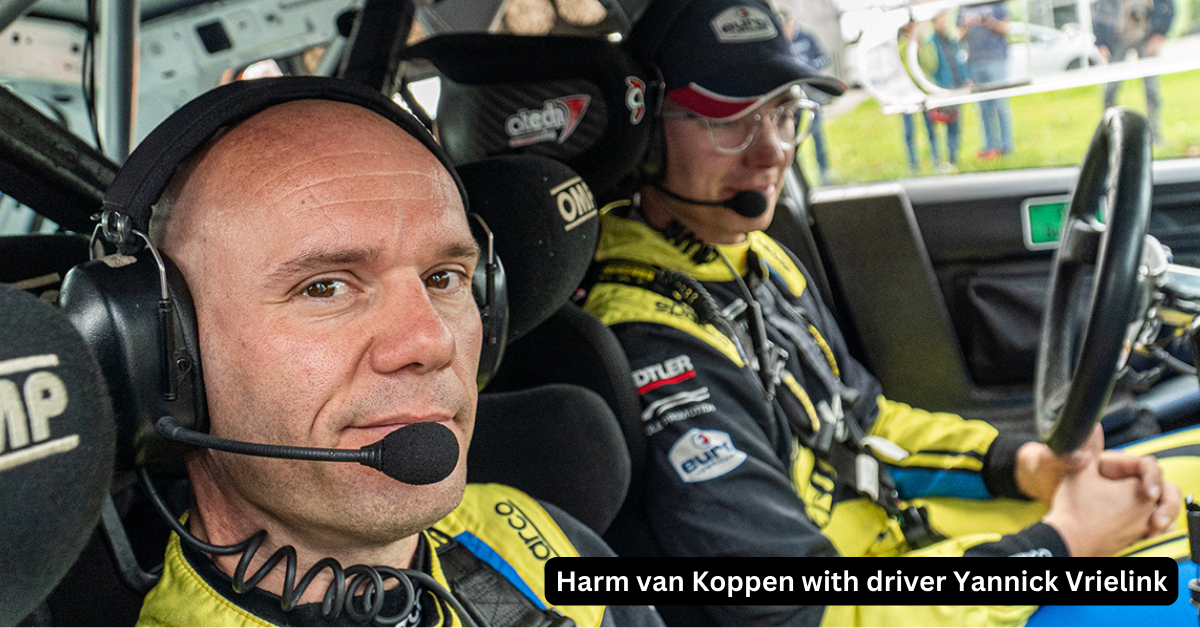
You drive your car to the start of the special stage and when the light turns green, you race as fast as possible over the road. My driver is pushing the pedal to the metal and I am reading the notes in the rhythm of our pace.
But what we don't control is the weather, animals, stones or other things blocking parts of the road. Or even parts of the road that have been changed because other participants have cut the road and now it's full of mud.
Cybersecurity and doing business are the same. You try to mitigate and prepare as much as possible. But when the day starts you will get into situations that can cause risk to the business. Or things you cannot control like a cyberattack, DDoS or power outage. You know it's possible, so you prepare.
Which Is Harder: Winning a Race or Staying Protected Against the Latest Threats?
Both are hard to accomplish. In rally racing you have other competitors that all have the same goal. And there can be only one winning the overall race and become number one. You can control a lot of outcomes. If your budget is big enough, you can buy the fastest and most recent car. You can test before rallies, you can bring a better equipped crew of mechanics and engineers, and more spare parts in case something goes wrong. But still, your car can stop because of a 30-cent piece of plastic somewhere in the engine and the race is over.
Cyber threats are less predictable than a rally stage. And in this field, having a bigger budget is also probably better for the overall protection in fighting against cyber criminals. But one minute of lesser attention by one of your employees and you can have a ransomware attack inside your company. So for this question, I believe both are very hard.
What Is the Biggest Challenge That ITSPs Face Today From a Threat/Risk Perspective?
I believe that the biggest challenge today is people. And what I mean with that is two-sided.
First, we need people that have knowledge of threats: Hunters, SOC and NOC people that know how to manage and configure SIEM tools and xDR. These people are scarce. They are seduced to work for bigger companies that can pay more so they leave the smaller security players in the MS(S)P space.
And on the other hand, there is everyone else that works with computers. Threat actors find ways to impersonate others. First with email (phishing), later with texting (smishing), and now with AI we all face deepfake voice and even Teams copies. It’s hard to keep up with that and we need to support people in this continuing evolution. Not only with shiny, new technical features or processes to support these new things, but to make sure that every person knows their responsibility and role in the team.
Same as in rally racing. If our mechanics don't keep up on the latest techniques and don't understand how important fixing part X is for the outcome of the rally, we don't make it to the finish.
Unlike a Race, Can Anyone “Win” at Cybersecurity?
As long as there is money to make by cyber criminals, that race will never end. If you tell a rally driver if they continue to drive, they can earn more, they will keep going. That's what is making the world go round.
If you talk about winning, then every day a company “survived” without being hit by ransomware or didn’t have to use their backup because they lost pieces of data, it's a win.
What’s Your Best Advice for Partners on “Winning the Race?”
Every customer, big or small, needs to have a specialist with them. Same as in rally driving, a driver wants a car to behave as they like it. Some like understeer, some like oversteer and some like it very neutral.
Understand what the driver needs. And adapt to the road ahead. It can be smooth on tarmac or very bumpy and rocky on the roads like you see in Argentina or Greece. Or it can be fast gravel as the stages in Finland and Norway. Whatever is coming, you have to prepare. And you need good mechanics to maintain the car and get it to the right setup. And because external conditions it's continuously changing, you need to check in regularly.
My advice is to keep the conversation going. Check your current state (your oil check) and discuss short- and long-term goals with your customer. Adapt to these goals and support your customer on their road to victory.
And, although there are only two persons in the rally car, without the full team we could not finish the race, let alone win. So be grateful and respectful for all these men and women that are there to support. And keep investing in them. In their knowledge and personal growth, otherwise another team will get their hand on them.