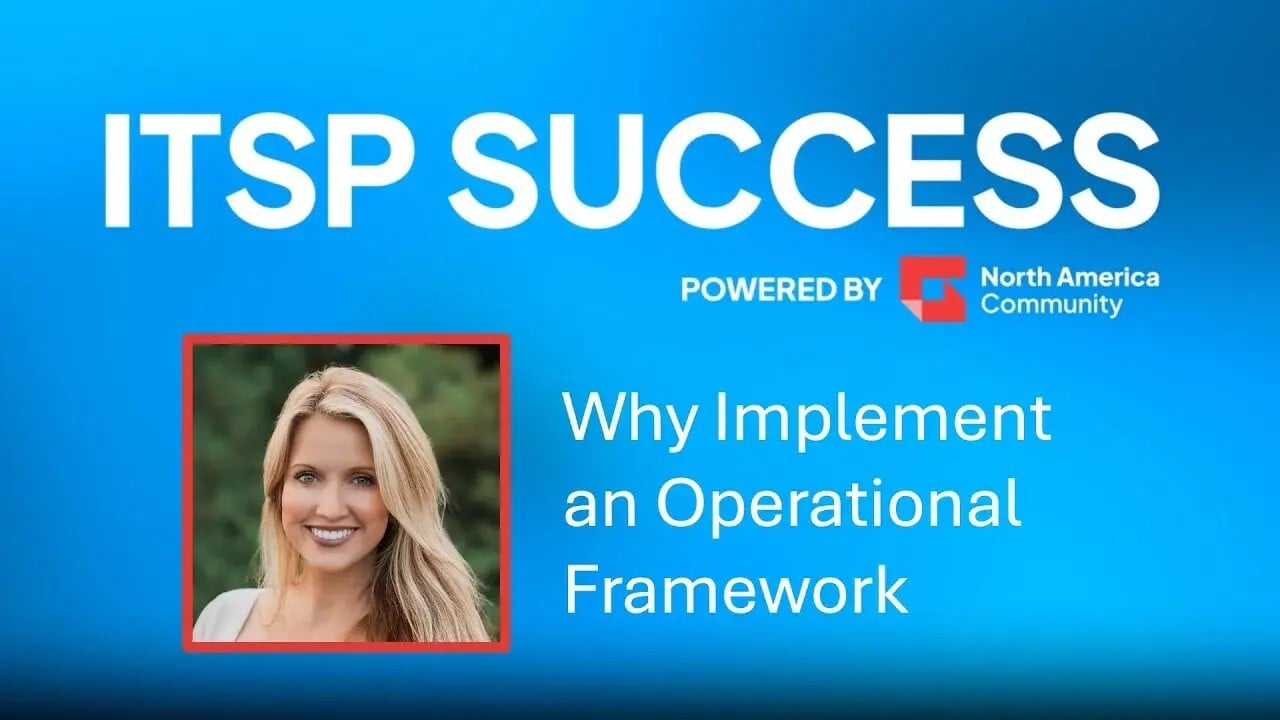
⚡ QUICK ANSWER When COVID forced their team remote overnight, the cracks in the leadership structure became impossible to ignore—silos, lack of accountability no shared mission. In this GTIA ITSP Success Story, Katherine Gray, operations manager at Warren Averett Technology Group, shares how implementing EOS (Entrepreneurial Operating System) transformed a reactive, misaligned team into a data-driven, accountable organization. The lesson? Stop hoping for the business you want. Build the framework to get there.
What Happens When Leadership Has No Shared Operating System?
Ask anyone on the team what the company's core values are—and get a different answer from every person. That's not a communication problem. That's a structural one. For Katherine Gray, operations manager at Warren Averett Technology Group, the cracks had been forming for years: Leadership operating in silos, accountability gaps and a mission statement that meant something different depending on who you asked. The organization was running on instinct—and instinct only takes you so far.
Then COVID hit. The entire workforce went remote overnight, and every misalignment that had been manageable in person became impossible to ignore. Lack of accountability. Breakdown in communication. A leadership team that realized, clearly and urgently, that something had to change.
Why They Chose an Operational Framework—and Which One
The decision wasn't to work harder. It was to work differently. The team evaluated several operational frameworks before landing on EOS—the Entrepreneurial Operating System. The appeal was specific: Data-driven accountability, clear KPI tracking and a structured cadence for leadership meetings that replaced ad hoc chaos with intentional rhythm.
"There are several different frameworks," Gray said, "but we chose EOS for the data-driven approach, the KPIs, the cadence of our leadership meetings." The right framework is the one your team will actually run. For them, EOS fit.
What Changed After Implementation
The shift was immediate—and it showed up in three distinct ways.
Trust and cohesiveness in leadership. Before EOS, the leadership team was fragmented. After implementation, they had a shared language, shared goals and a shared accountability structure. The trust that hadn't existed before started to build.
Data where there had been none. Every department began tracking KPIs weekly. That visibility meant the team could spot problems early—before they became crises. "We were not having to firefight," Gray said. "We could proactively fix things before they became a major problem."
Clarity of ownership. The EOS implementation included building an accountability chart—a deliberate separation of roles from people. Every role had a named owner. That structure eliminated the ambiguity that had allowed things to fall through the cracks.
Key Takeaways
1. Misalignment is a structural problem, not a people problem. If your team can't agree on core values or mission, the issue isn't the team—it's the absence of a shared framework to operate from.
2. Crises expose what's already broken. COVID didn't create the problems at this MSP. It surfaced them. Don't wait for a forcing event to address what you already know isn't working.
3. Proactive beats reactive—every time. KPI tracking and regular leadership cadence shifts your team from fighting fires to preventing them. That's not just efficiency. It's how you lead.
4. Separate roles from people. An accountability chart clarifies ownership without making it personal. Every role has an owner. Every gap becomes visible.
5. Hope is not a strategy. "A lot of MSPs have a hope strategy—I hope we'll hit $50M, I hope we'll have a great culture. But unless you have a framework to operate your business from, you're just hoping," Gray said. Start with the end in mind. Build backward from there.
Frequently Asked Questions
What is EOS and why do MSPs use it? EOS, or the Entrepreneurial Operating System, is a business management framework built around six key components: Vision, people, data, issues, process and traction. MSPs use it to create leadership alignment, establish KPI accountability and build a structured operating cadence that replaces reactive management with proactive leadership.
How do I know if my MSP needs an operational framework? If your leadership team is operating in silos, you can't get a consistent answer about your company's mission or values, or you're spending more time firefighting than building—those are signs your business is running on instinct rather than structure. An operational framework gives your team a shared system to lead from.
What's the difference between working in the business vs. on the business? Working in the business means you're caught up in daily operations—solving tickets, managing client escalations, handling billing. Working on the business means you're stepping back to set strategy, build systems and lead your team toward long-term goals. An operational framework is what makes that shift possible.
Connect with peers who get it.
Connect with peers who get it. Join fellow IT channel pros at ChannelCon, August 3-5 in San Diego.