Steven Spielberg once said, “the delicate balance of mentoring someone is not creating them in your own image but giving them the opportunity to create themselves.” It’s in that very spirit that mentorship programs have become a powerful driver of employee development, engagement and retention.
Add to that, the fact that employees with mentors are twice as likely to be engaged compared to those without (Gallup), and 91% of workers with a mentor report being satisfied with their jobs (Mentorink).
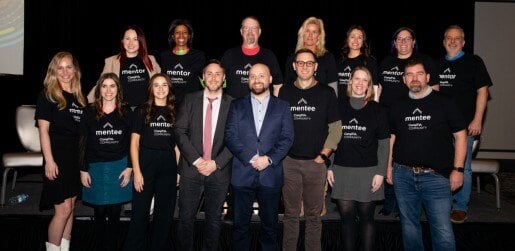
Mentorship programs have become an essential tool in today’s workplace, and GTIA members can participate in a program that connects people across the IT channel, fostering engagement and driving goal-oriented success.
We asked Jack Lyons, business development manager at MysonPages, to describe his GTIA mentorship experience. Here’s what he had to say.
Why is mentoring worth the time investment? And why should you sign up for the next GTIA cohort?
Since joining the MSP space in 2020, engaging in the IT community has been a big part of how we (as an MSP) learn and grow. We’ve been attendees at GTIA events for many years, and regularly attend other vendor events in space, both virtually and in person. We’re also hosts of a local peer group of MSPs who meet in the Northwest of England once a month. So, in short, engaging with community peers is nothing new to us!
I had no expectations heading into my first mentoring session. Using a template from GTIA I created four short- to medium-term goals that aligned with both business and personal development opportunities. I agreed with my mentor on a meeting cadence of once a week for one hour. We got on well and it was clear my mentor had experience that would be valuable in working towards the goals I’d identified.
The sessions that followed pushed me to make progress against all the goals identified— goals I’d previously not had the headspace to consider, never mind making progress towards. On reflection there are four key reasons for this, and they are what make a successful mentoring relationship unique.
Accountability
Meeting once a week and setting small goals to report back on the following week meant constant progress throughout the sessions. Ultimately my mentor was volunteering and taking time out of a busy senior position in an MSP—and so the accountability I felt based on this was significant. If they could find the time for this, there was no reason I couldn’t. This made me focus on making progress each week. Some of the actions I took were challenging, and the accountability made me tackle things head on—pushing into areas of discomfort that yielded significant positive results.
Challenging Assumptions
In the busyness of the day-to-day in an MSP, it can be hard to find time for reflective thinking. Most businesses will have ‘their way’ of doing things, with any discussion being between the same people or voices. Discussing some of our opportunities, my mentor was able to offer challenges to some big assumptions I had about how we did things based on their experience. I’ve been able to take these new perspectives back into our MSP and use them to drive positive change.
Same Industry, Same Challenges
The journey of most MSPs have quite a bit in common. It quickly became apparent from our discussions we’d faced many of the same challenges—perhaps on a different timeline—leading to new ideas and new perspectives.
Outside Perspective
Frank, honest discussion was the natural format of all our sessions. Ultimately my mentor had no ‘skin in the game’ with our MSP, meaning communication both ways could be open. Without a doubt this led to insights and progress I otherwise wouldn’t have achieved.
Jack Lyons is business development manager at Myson Pages and a member of the GTIA UK & Ireland Community Executive Council.